Floral Journal Notebook KDP Interior: Elevating Low-Content Publishing with Professional Design Assets
The landscape of self-publishing has shifted dramatically over the last few years. What began as a gold rush for simple, repetitive lined notebooks has matured into a competitive marketplace where aesthetic quality and niche specificity determine success. For creators, entrepreneurs, and hobbyists entering the Amazon KDP space, the difference between a book that sells and one that languishes often lies in the perceived value of the interior design. This is where a professionally crafted Floral Journal Notebook KDP Interior becomes a strategic asset rather than just a decorative element. It bridges the gap between amateur formatting and boutique stationery quality, offering a tangible product that resonates with modern consumers seeking mindfulness, organization, and beauty in their analog tools.
For marketers, freelancers, and business owners looking to diversify income streams or create branded merchandise, understanding the technical and creative specifications of these interiors is essential. The market no longer rewards generic content; it rewards intentionality. A floral journal interior is not merely about placing flower clip art on a page. It represents a convergence of digital design precision and consumer psychology, tailored for an audience that values mental wellness, gardening tracking, nature study, or simply a more beautiful approach to daily planning. By leveraging high-quality source files and print-ready PDFs, publishers can bypass the steep learning curve of graphic design while maintaining the flexibility needed to build a unique brand identity.
The Evolution of Niche Stationery in Digital Publishing
To understand why specific design assets matter, we must look at how user expectations have evolved. Five years ago, a "floral notebook" might have been satisfied with a public domain image stretched across a cover and standard college-ruled lines inside. Today’s buyer, particularly in the 20-to-50 demographic, is discerning. They are accustomed to the polished aesthetics of Instagram stationery influencers and Etsy bestsellers. They expect cohesive themes where the interior pages complement the cover art through consistent typography, margin management, and thematic illustration placement.
This shift mirrors broader lifestyle trends toward intentional living and digital detoxing. As screen fatigue increases, adults are returning to pen and paper, but they want those physical tools to feel special. A floral journal serves multiple functional niches simultaneously: it acts as a gratitude diary, a botanical sketchbook, a garden planner, or a creative writing prompt book. Consequently, the interior design must be versatile enough to support these varied uses without feeling cluttered. This demand for versatility drives the need for professional-grade assets that include editable source files like AI and EPS formats, allowing publishers to customize layouts rather than being locked into a static template that thousands of others are using.
Technical Specifications as a Competitive Advantage
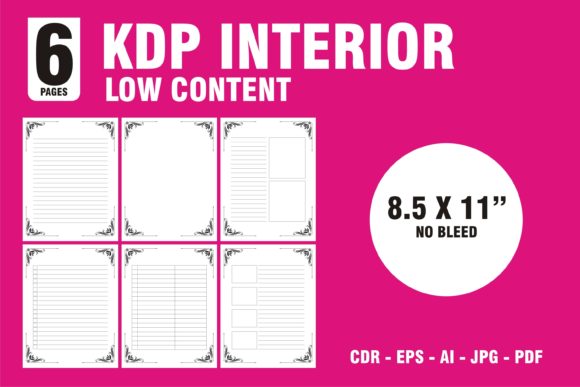
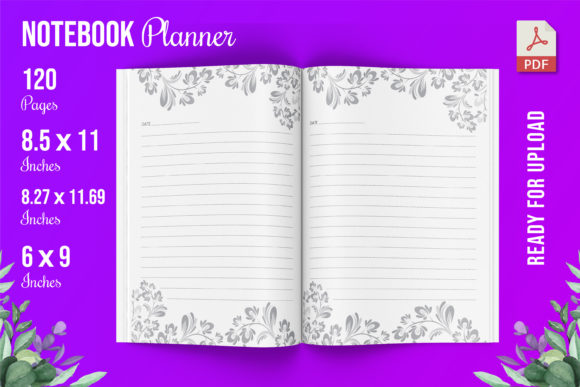
In the low-content publishing world, technical errors are the primary cause of rejected manuscripts and poor customer reviews. Margins that are too narrow, bleed issues that cut off artwork, or low-resolution printing can destroy a brand's reputation instantly. Utilizing a comprehensive design package mitigates these risks by providing pre-validated specifications. When acquiring a Floral Journal Notebook KDP Interior, the inclusion of three distinct size options addresses the diverse needs of the market segment.
- A4 Size (8.27″ x 11.69″): Ideal for academic journals, detailed nature observation logs, or professional portfolios where maximum writing space is required.
- Letter Size (8.5″ x 11″): The standard US format, perfect for general-purpose journals, homeschooling resources, and office-based creative planning.
- 6″ x 9″ Trim: The most popular size for personal journals, travel diaries, and gift items due to its portability and intimate feel.
Having access to all three dimensions in a single asset package allows a publisher to test market preferences without commissioning new designs. Furthermore, the provision of both bleed and no-bleed ready PDFs is critical. Bleed settings are notoriously difficult for beginners to master; having a pre-formatted 120-page PDF ensures that floral elements extending to the edge of the page will print correctly without white borders or cropped artwork. This technical reliability transforms the publishing process from a troubleshooting nightmare into a streamlined workflow.
The Strategic Value of Editable Source Files
While ready-to-upload PDFs offer convenience, the long-term value for serious entrepreneurs lies in the editable source files. Receiving 1 AI file, 1 EPS file, and 6 JPEGs alongside the print-ready PDFs changes the nature of the purchase from a single-use license to a foundational design system. For freelancers and agencies creating client work, or for business owners building a proprietary product line, the ability to open these files in Adobe Illustrator is non-negotiable.
Editability allows for brand alignment. A creator can adjust the color palette of the floral illustrations to match a specific seasonal collection or corporate identity. Text prompts can be modified to target specific sub-niches; for example, changing generic "Notes" headers to "Planting Schedule," "Bloom Tracker," or "Gratitude Reflection." This customization is what separates a generic commodity from a branded product. Additionally, the included JPEG files serve immediate marketing needs. High-quality visuals are required for Amazon A+ Content, social media promotion, and Pinterest marketing. Having six dedicated JPG assets means the promotional material will perfectly match the product interior, building trust with potential buyers who want to see exactly what they are purchasing.
Aligning Design with Modern Creative Workflows
The modern creator economy operates on speed and adaptability. Professionals and side-hustlers rarely have the luxury of spending weeks designing a single notebook interior from scratch. However, speed cannot come at the cost of quality. The specification set described here supports an agile publishing workflow. With 120 pages already formatted and structured, the time-to-market is reduced significantly. This efficiency allows publishers to focus on keyword research, niche validation, and marketing strategy rather than pixel-pushing.
Moreover, this workflow supports portfolio expansion. A single high-quality floral theme can be adapted across multiple products. The A4 version might become a "Botanical Illustration Workbook," the Letter size a "Teacher’s Nature Study Planner," and the 6x9 version a "Mindfulness Gift Journal." Because the source files are vector-based (AI/EPS), scaling graphics between these sizes results in zero quality loss, ensuring crisp lines and vibrant details regardless of the trim size. This scalability is essential for maintaining professional standards across a diverse catalog.
Practical Implications for Diverse User Groups
The relevance of a Floral Journal Notebook KDP Interior extends beyond traditional authors. Educators can utilize these interiors to create engaging nature journals for students, capitalizing on the growing emphasis on outdoor learning and environmental literacy. Therapists and coaches may use them as tools for clients, where the soothing floral imagery supports therapeutic writing exercises. Small business owners in the wedding or event industry can create custom guestbooks or vendor planners that align with floral themes.
For the curious reader or hobbyist transitioning into publishing, these assets lower the barrier to entry while raising the ceiling for quality. Instead of struggling with free, low-resolution resources that yield amateur results, they start with a professional foundation. This is particularly important in saturated categories. When hundreds of competitors offer similar concepts, superior interior design is often the deciding factor for a customer browsing via "Look Inside" previews. The 120-page count strikes a practical balance: thick enough to feel substantial and valuable, yet cost-effective enough to maintain healthy royalty margins.
Navigating Market Saturation with Quality Assets
It is realistic to acknowledge that the floral journal niche is competitive. Success requires more than just uploading a file; it requires a product that solves a problem or fulfills a desire better than existing options. The comprehensive specification package aids in this differentiation. By utilizing the editable AI and EPS files, publishers can create variations that are unique to their store. Perhaps one edition focuses on wildflowers with ample sketching space, while another features roses with structured prompting. This level of granularity is only possible with full source file access.
Furthermore, the inclusion of specific size dimensions ensures compliance with global market standards. A4 caters to international customers in Europe and Asia, while Letter and 6x9 serve the North American market effectively. Ignoring size diversity limits potential reach. By providing ready-made PDFs for all three, the design asset removes the friction of international expansion. Publishers can upload multiple editions simultaneously, capturing traffic from different regional search behaviors without additional design labor.
Sustainable Publishing Practices and Long-Term Value
Finally, investing in high-specification design assets aligns with sustainable business practices. Rather than churning out disposable, low-quality books that contribute to marketplace noise, publishers can build evergreen products. A well-designed floral journal is timeless; unlike trend-based novelty notebooks, nature-themed stationery maintains steady demand year after year. The durability of vector files (AI/EPS) ensures these assets remain usable even as software updates or printing standards evolve.
The combination of immediate utility (ready-to-upload PDFs) and long-term flexibility (editable source files) makes this specification set a pragmatic choice for anyone serious about KDP publishing. It respects the creator's time while honoring the customer's expectation of quality. In an era where digital tools increasingly facilitate physical creativity, having the right foundational assets is not a luxury—it is a prerequisite for building a reputable, profitable, and satisfying publishing venture. Whether you are a seasoned marketer optimizing a catalog or a gardener sharing your passion through print, the technical and aesthetic integrity of your interior design defines your success.