Fashion Sketchbook with Calendar: KDP Interior Guide
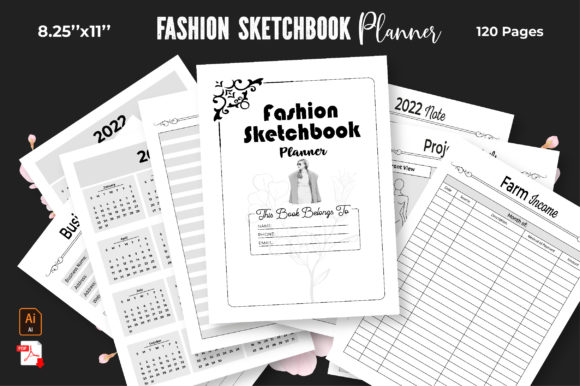
Launching a successful low-content or no-content publishing business on Amazon KDP requires more than just uploading generic templates; it demands products that solve specific problems for niche audiences. The Fashion Sketchbook with Calendar represents a strategic hybrid product that bridges the gap between creative expression and practical organization. For publishers, designers, and entrepreneurs targeting the fashion community, this interior offers a ready-made solution that combines artistic utility with temporal planning. Unlike standard blank journals, this 120-page resource integrates structured calendar layouts with dedicated sketching spaces, creating a functional tool for students, professionals, and hobbyists who need to visualize ideas alongside their daily schedules.
The visual character of this interior is defined by clean lines and purposeful whitespace. In editorial design and publishing, clutter is the enemy of creativity. This template respects the user's need for an unobtrusive framework that supports rather than competes with their own illustrations. The layout balances the rigidity of calendar grids with the freedom of open sketch areas, establishing a visual hierarchy that guides the user without restricting them. This duality is essential for brand perception within the fashion niche, where aesthetics and functionality must coexist seamlessly. When a customer opens this book, they should immediately understand its value proposition: a dedicated space to plan their season while simultaneously designing their next collection.
Strategic Applications Across Creative Niches
While primarily designed as a KDP interior, the underlying structure of the Fashion Sketchbook with Calendar serves as a masterclass in layout design for various creative projects. Understanding where this type of formatted content performs best can help marketers and content creators leverage similar design assets across different platforms.
- Fashion Education and Student Portfolios: Design students often struggle to organize their coursework and personal projects. This interior provides a semester-ready structure, allowing learners to map out assignment deadlines next to their croquis and technical drawings. The 8.5″ x 11″ dimension mirrors standard portfolio sizes, making it a practical companion for academic success.
- Professional Collection Planning: Independent designers and small brand owners use seasonal calendars to manage production timelines. Integrating sketch pages directly into the planning phase allows for real-time iteration. This reduces friction between the ideation and scheduling phases, streamlining the workflow for busy creatives.
- Influencer and Blogger Content Calendars: Fashion content creators require rigorous scheduling for posts, shoots, and collaborations. A specialized sketchbook allows influencers to storyboard outfits and visualize grid aesthetics alongside their posting dates, ensuring visual consistency in their brand identity.
- Retail Merchandising and Buying: Buyers and merchandisers can utilize this format to track market trends and buying cycles. The combination of dates and drawing space facilitates quick notation during trade shows or market weeks, serving as both a diary and a visual reference tool.
The versatility of this layout extends beyond print. Digital creators can adapt these principles for web design or social media graphics, using the same balance of grid-based scheduling and organic visual elements to create engaging digital planners or iPad-friendly templates. The core concept remains consistent: providing a structured environment for unstructured creativity.
Typography and Layout Hierarchy in Functional Interiors
Although this is a low-content product, typography plays a critical role in its usability and perceived quality. In functional design, readability dictates engagement. If the calendar text is too dense or the sketch guidelines are too heavy, the user experience degrades. This interior utilizes modern typography principles to ensure clarity. The choice of sans serif fonts for dates and headers typically works best here, offering high legibility at smaller point sizes while maintaining a contemporary aesthetic that aligns with current fashion sensibilities.
When evaluating or customizing this interior, consider how font pairing influences the overall tone. A minimalist sans serif for the structural elements paired with a subtle script font for section titles can add personality without sacrificing professionalism. This approach mirrors high-end editorial design, where typeface selection reinforces brand identity. For KDP publishers, ensuring that the text remains crisp after printing is paramount. The included PDF files are tested for KDP standards, but understanding why certain typographic choices were made helps in marketing the product effectively. You aren't just selling blank pages; you are selling a professionally typeset tool that respects the end-user's craft.
Furthermore, the visual weight of the sketch guidelines matters significantly. They must be visible enough to assist with proportion but light enough to disappear once ink or pencil is applied. This delicate balance is a hallmark of premium design assets. When describing this product to potential buyers or adapting it for other commercial projects, highlight these subtle usability features. They demonstrate expertise and attention to detail, separating your offering from amateur competitors who simply overlay generic grids onto white backgrounds.
Customization and Technical Specifications for Publishers
One of the most significant advantages of this Fashion Sketchbook with Calendar download is the inclusion of editable Adobe Illustrator files alongside the print-ready PDF and JPEG formats. This level of access transforms a static product into a dynamic foundation for your publishing business. While the 120-page, 8.5″ x 11″ specification is optimized for immediate upload, the ability to customize allows you to pivot based on market research or seasonal trends.
Practical customization goes beyond changing the cover. Consider modifying the internal structure to target micro-niches. For example, you could adjust the ratio of calendar pages to sketch pages to create a "Fashion Week Planner" versus a "Year-Round Design Journal." The editable source files enable you to alter header typography, add branding elements, or even translate the content for non-English markets. This flexibility is crucial for building a diverse catalog without starting from scratch every time.
- Verify Bleed and Margins: Even though the files are tested, always double-check safety zones if you modify the layout. KDP’s printing tolerances can shift, and ensuring your calendar grids and sketch borders remain within the safe area prevents rejection or poor trimming.
- Test Print Before Publishing: Screen resolution differs vastly from physical output. Order a proof copy to evaluate the paper opacity and line weight. Fashion markers can bleed through standard KDP paper; knowing this limitation helps you write accurate product descriptions and manage customer expectations regarding media compatibility.
- Optimize File Size: High-resolution JPEGs and complex vector files can result in massive PDF uploads. Use optimization tools to compress images without losing print quality. Faster upload times and processing reduce friction in your publishing workflow.
- Licensing and Commercial Use: Review the specific license terms included with the download. Ensure you have full commercial rights to sell the printed book and understand any restrictions on reselling the digital files themselves. Protecting your business starts with clear legal compliance.
Evaluating Fit for Your Low-Content Business
Not every trend suits every publisher. Before integrating the Fashion Sketchbook with Calendar into your portfolio, assess its alignment with your existing brand strategy. If your current catalog focuses on mindfulness or finance, this fashion-centric tool might confuse your audience. However, if you serve creatives, students, or lifestyle demographics, it fills a logical gap. Analyze competitor listings to identify missing features. Perhaps existing options lack adequate note-taking space or use outdated croquis proportions. Your customizable files allow you to address these pain points directly, creating a superior product that earns better reviews and higher conversion rates.
Ultimately, success in the KDP space relies on providing genuine value. This interior succeeds because it acknowledges the dual nature of the fashion professional’s life: the dreamy, chaotic world of design and the disciplined, linear world of business. By offering a product that honors both, you position yourself not just as a seller of notebooks, but as a partner in your customer's creative journey. Whether used for personal organization, educational purposes, or professional planning, this sketchbook serves as a tangible intersection of art and commerce, making it a resilient addition to any serious low-content publishing strategy.