Printable Accounting Ledger Book: A Practical Tool for Financial Management
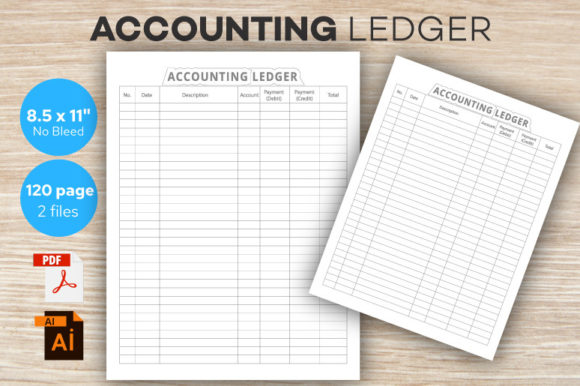
Printable Accounting Ledger Book is a versatile and user-friendly tool designed to help individuals and small businesses keep track of their financial transactions. This book, with its 6-column layout, provides a simple yet effective way to record income and expenses, making it an essential resource for anyone looking to manage their finances more efficiently.
Why Choose a Printable Accounting Ledger Book?
There are several compelling reasons why someone might be interested in using a Printable Accounting Ledger Book:
- Cost-Effective: Compared to digital accounting software, a printable ledger book is a budget-friendly option that doesn't require any ongoing subscription fees.
- User-Friendly: The straightforward design and clear instructions make it easy for beginners to start recording their financial data without a steep learning curve.
- Customizable: With the ability to print and own the files, users can customize the pages to fit their specific needs, such as adding or removing columns.
- Physical Record: For those who prefer tangible records, a printed ledger book provides a physical document that can be easily accessed and reviewed.
Benefits and Considerations
The Printable Accounting Ledger Book offers several benefits, but it's also important to consider its limitations:
Benefits
- High-Resolution Interiors: The 300 dpi resolution ensures that all printed pages are clear and legible, making it easier to read and use.
- Convenient Dimensions: At 8.5 x 11 inches, the book is standard letter size, fitting well into most binders and file folders.
- Ample Pages: With 120 pages, there is plenty of space to record a significant amount of financial data, making it suitable for both short-term and long-term use.
- Multiple File Formats: The inclusion of PDF, AI, and EPS files allows for flexibility in printing and editing, catering to different user preferences and needs.
Considerations
- Manual Entry: While the manual entry process can be time-consuming, it also provides a hands-on approach to understanding and managing finances.
- No Digital Integration: Unlike digital tools, a printable ledger book does not offer automatic calculations or integration with other financial software, which may be a drawback for some users.
- Storage and Security: Physical documents need to be stored securely to prevent loss or damage. Users should also consider the privacy and security implications of keeping sensitive financial information in a physical format.
Situations Where It May Be a Strong Fit
A Printable Accounting Ledger Book is particularly well-suited for the following scenarios:
- Small Business Owners: Entrepreneurs and small business owners who need a simple, cost-effective way to track their financial transactions.
- Freelancers and Independent Contractors: Individuals who need to keep a record of their income and expenses for tax purposes and client invoicing.
- Personal Finance Enthusiasts: People who prefer a hands-on approach to managing their personal finances and want a clear, organized way to track their spending and savings.
When to Consider Alternatives
While a Printable Accounting Ledger Book is a great tool, there are situations where alternatives might be more appropriate:
- Complex Financial Needs: If you have a large volume of transactions or need advanced features like automatic calculations, reports, and integrations, a digital accounting software might be a better choice.
- Collaborative Work: If multiple people need to access and update the financial records, a cloud-based solution that allows for real-time collaboration would be more suitable.
- Environmental Concerns: For those who are environmentally conscious, a digital solution reduces paper waste and can be more sustainable.
Making the Right Decision
Choosing whether a Printable Accounting Ledger Book is right for you depends on your specific needs and preferences. Consider the following factors to make an informed decision:
- Financial Complexity: Assess the complexity of your financial transactions and determine if a simple, manual system will suffice.
- Budget: Evaluate your budget and decide if the upfront cost of a printable ledger book is more beneficial than the recurring costs of digital software.
- Preference for Physical vs. Digital: Reflect on your comfort level with physical versus digital record-keeping and choose the method that aligns best with your habits and preferences.
- Security and Privacy: Consider the importance of data security and privacy and choose the option that provides the necessary safeguards for your financial information.
In conclusion, a Printable Accounting Ledger Book is a practical and cost-effective solution for managing financial records. By carefully considering your needs and preferences, you can determine if this tool is the right fit for your financial management goals.