The Accounting Ledger Logbook: Reclaiming Financial Clarity in a Digital-First Economy
In an era defined by algorithmic trading, automated invoicing, and cloud-based financial dashboards, the deliberate act of recording transactions by hand may seem counterintuitive. Yet, for a growing cohort of entrepreneurs, freelancers, and creative professionals, the Accounting Ledger Logbook has reemerged not as a relic of the past, but as a vital instrument of modern business strategy. This resurgence is not driven by nostalgia, but by a practical need for cognitive engagement with financial data that software simply cannot provide. As we navigate an increasingly complex economic landscape, the tactile ledger offers a grounded method for tracking income, expenses, and financial goals that complements rather than competes with digital tools.
Redefining Financial Tracking for the Modern Creator Economy
The contemporary workforce has shifted dramatically toward independent contracting, gig work, and small-scale entrepreneurship. Unlike traditional employees with standardized pay stubs and employer-managed benefits, these professionals face a fragmented income stream and variable expense structures. The Accounting Ledger Logbook serves as a centralized command center for this volatility. It is more than a record-keeping device; it is a behavioral tool designed to bridge the gap between earning money and understanding cash flow.
For marketers managing ad spend, creators balancing royalty income against production costs, or consultants tracking billable hours, the ledger provides immediate visual feedback. When you physically write down an expense, the psychological weight of that transaction is processed differently than when entering data into a spreadsheet. This phenomenon, often referred to as "embodied cognition," suggests that motor skills involved in handwriting enhance memory retention and conceptual understanding. In the context of business finance, this means that users of a physical ledger are statistically more likely to internalize their spending habits and revenue patterns, leading to more proactive decision-making.
Technical Specifications Designed for Professional Utility
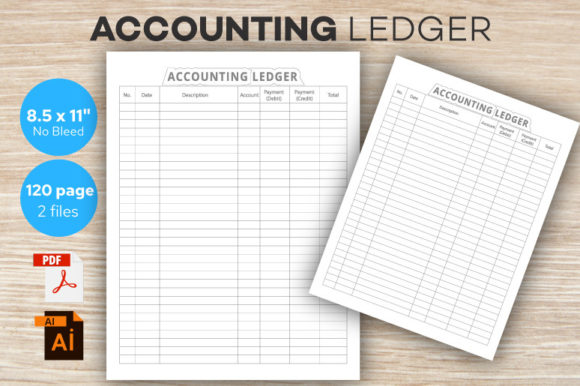
Not all notebooks are created equal when it comes to financial management. A generic journal lacks the structural integrity required for serious accounting. The specific Accounting Ledger Logbook discussed here is engineered with precise specifications to meet the demands of tax preparation and financial auditing. Understanding these physical parameters is essential for professionals considering integrating this tool into their workflow.
- Dimensions: The 8.5″ x 11″ inch format mirrors standard letter-size paper, ensuring compatibility with filing systems, scanners, and desk organizers. This size provides ample horizontal space for multi-column entries without cramping handwriting.
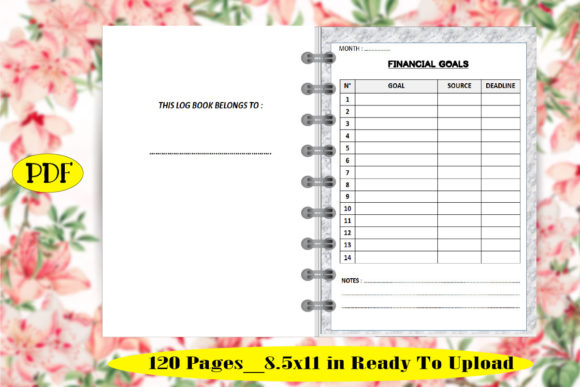
- Page Count: With 120 pages, this logbook strikes a balance between portability and longevity. It is substantial enough to cover several months of active trading or a full fiscal quarter for smaller entities, yet slim enough to transport to client meetings or co-working spaces.
- Ownership Security: The inclusion of a dedicated "Belongs To" page is a critical security feature. For freelancers who work in coffee shops or shared offices, losing a financial record can be catastrophic. This page establishes legal ownership and provides contact information for recovery.
- Structured Layouts: Pre-formatted sections for Accounting Ledger entries, Bill Planner tracking, and Financial Goals eliminate setup time and ensure consistency across records.
The Intersection of Analog Tools and Digital Compliance
A common misconception is that adopting a physical ledger creates friction with digital tax compliance. On the contrary, a well-designed Accounting Ledger Logbook acts as the perfect upstream source for downstream digital processing. We are seeing a hybrid workflow emerge among savvy professionals where the analog book serves as the primary capture point, while digital platforms serve as the archival and reporting layer.
This is where the availability of the ledger in a downloadable PDF format becomes strategically relevant. By securing a digital version ready for upload or printing, users gain flexibility. Entrepreneurs can print fresh copies via Amazon KDP or local services as needed, maintaining a continuous chain of custody for their financial records. Furthermore, having a digital master file allows for backup redundancy. If the physical book is damaged or lost, the template remains accessible. This duality addresses the modern professional's anxiety about data loss while preserving the benefits of analog tracking.
Supporting Broader Lifestyle and Wellness Trends
The attention being paid to physical ledgers also intersects with broader wellness and productivity trends. Burnout is prevalent among high-performers, often exacerbated by screen fatigue and the always-on nature of digital notifications. Financial management, typically a high-stress activity conducted on glowing screens, contributes to this cognitive load.
Transitioning financial planning to a paper-based medium creates a necessary boundary. It transforms accounting from a digital chore into a mindful ritual. The Bill Planner section, for instance, allows users to disconnect from Wi-Fi and focus solely on obligations and resources. This separation of concerns supports mental health by compartmentalizing financial stress. Additionally, the "Financial Goals" section encourages forward-looking visualization. Writing goals by hand has been linked to higher achievement rates because it forces clarity of thought; one cannot copy-paste vague aspirations into a physical ledger. The constraint of ink on paper demands specificity, turning abstract desires into actionable line items.
Adapting to Changing Workflow Expectations
The market for business tools is evolving away from one-size-fits-all software solutions toward modular, customizable systems. Professionals no longer want to be locked into proprietary ecosystems that dictate how they organize their lives. The Accounting Ledger Logbook represents sovereignty over one's own data structure. Because it is non-proprietary and format-agnostic, it adapts to the user, not the other way around.
This adaptability is crucial for diverse audiences. A real estate agent might use the ledger to track property maintenance expenses and commission income. A freelance graphic designer might utilize the Bill Planner to manage software subscriptions and client invoicing cycles. An enthusiast managing personal investments might focus exclusively on the Financial Goals and asset tracking columns. The static nature of the printed page paradoxically offers more freedom than dynamic software because it imposes no update cycles, no subscription fees, and no learning curves.
Practical Applications in Daily Business Operations
To understand the true value of this tool, we must look at practical application beyond theory. How does a 120-page, 8.5″ x 11″ book function in a busy Tuesday afternoon?
- Daily Reconciliation: Instead of waiting for month-end bank feeds, professionals can reconcile receipts immediately upon receipt. The physical act prevents backlog accumulation.
- Client Meetings: Bringing a ledger to a meeting signals professionalism and preparedness. It allows for real-time note-taking regarding billable items without the barrier of a laptop screen.
- Tax Season Preparation: When handing off documents to a CPA, a completed ledger provides a narrative of the business year that raw CSV exports lack. Annotations in margins explain the "why" behind the numbers, potentially identifying deductible nuances that automated categorization misses.
- Cash Flow Forecasting: Using the Bill Planner section, users can map out future liabilities against current assets visually, creating a runway analysis that is instantly comprehensible at a glance.
The Strategic Value of Instant Accessibility
Time is the most scarce resource for the target audience of this ledger. The ability to download the “Accounting Ledger” instantly in PDF format removes barriers to entry. There is no shipping delay, no inventory shortage, and no waiting period. This immediacy aligns with the agile methodology adopted by many modern businesses. When a new project starts, or a new fiscal quarter begins, the infrastructure for tracking it should be available instantly.
Furthermore, the "ready to upload on Amazon KDP" specification suggests a level of professional publishing quality. Users are not downloading a rough draft; they are accessing a publication-grade interior file. This ensures that whether one prints it at home, uses a local print shop, or orders through KDP directly, the result is a clean, legible, and professional instrument. The typography, line weights, and spacing are optimized for readability and writing comfort, reflecting an understanding of end-user ergonomics.
Future-Proofing Through Fundamental Skills
While technology advances, the fundamental principles of double-entry bookkeeping and financial literacy remain constant. Relying solely on automation risks atrophying these core competencies. Professionals who maintain an Accounting Ledger Logbook keep their financial intuition sharp. They develop a sense for ratios, margins, and cash velocity that is difficult to acquire through dashboard observation alone.
As artificial intelligence begins to automate more aspects of financial analysis, the human element of interpretation becomes even more valuable. AI can categorize transactions, but it cannot understand the strategic intent behind a purchase or the emotional significance of a financial goal. The ledger preserves the human context of commerce. It serves as a training ground for better questioning of automated outputs. When the software says profitability is up, the ledger user can verify if that aligns with their lived experience of cash availability.
Integrating the Ledger into a Holistic Business System
Ultimately, the Accounting Ledger Logbook should be viewed as a component of a larger personal operating system. It pairs exceptionally well with digital calendars, project management tools, and banking apps. The key is intentionality. By designating the ledger as the "truth source" for daily capture and the digital tools as the "processing engine" for monthly reporting, professionals create a robust, redundant, and resilient financial tracking ecosystem.
The 120-page capacity encourages regular review cycles. Filling a book provides a natural milestone for reflection. Completing a ledger is an achievement in itself, marking a period of sustained discipline and growth. The "Financial Goals" section at the beginning sets the trajectory, while the subsequent accounting pages document the journey. This narrative arc is missing from endless digital spreadsheets but is inherent in the physical form factor.
For the entrepreneur, creator, or freelancer seeking to deepen their relationship with their business finances, the solution is not necessarily more software. It is often a return to first principles, facilitated by a tool designed for the realities of modern work. The Accounting Ledger Logbook, with its precise 8.5″ x 11″ dimensions, comprehensive 120-page layout, and instant digital accessibility, offers exactly that: a tangible anchor in a fluid economy. It validates the importance of slowing down to speed up, proving that in the pursuit of financial mastery, the most advanced technology is sometimes a pen and a purposefully designed page.